On Reform U.K.
The rise of Reform U.K., an opinion piece from William Birch, National Secretary of the High School Republicans
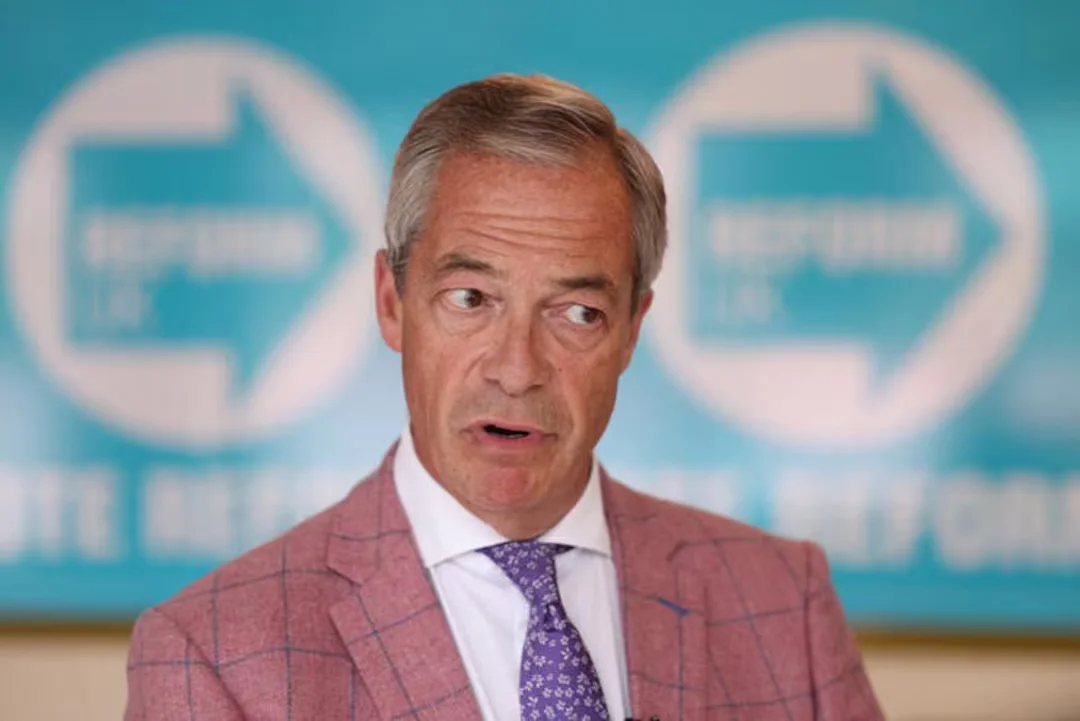
On May 7, Nigel Farage's Reform UK gained more than 1,200 council seats and took outright control of councils from Essex to Sunderland to Suffolk to Havering to Newcastle-under-Lyme. The Labour Party lost nearly 1,500 seats and roughly thirty councils. The Conservatives, who are supposed to be the alternative to Labour, lost another 400 seats and watched their twenty-five-year hold on Essex County Council disappear in one night. This was the loudest message British voters have sent their government in a generation, and the message was simple: the establishment is done.
For nearly a hundred years, Labour and the Conservatives traded power back and forth, bounced the blame, and kept running the country between them. Some were strong and productive, like the Churchill and Thatcher administrations, by courageously leading the country through a myriad of crises.
Nothing shows that betrayal more clearly than illegal migration. Small boats keep crossing the English Channel at record numbers under Labour, carrying tens of thousands of radical islamist young men a year from countries Britain is not at war with and owes nothing to. British taxpayers are paying for hotels to house them in towns all over the Kingdom. Labour promised to "smash the gangs," and so far, all that has produced is a series of endless press releases. Deportations are a small fraction of arrivals. Locals were never asked if they wanted any of this, and when they object, they get lectured by establishment politicians about how it makes them bad people. On top of all that, the Rwanda deportation plan, which could have at least scared off some of the crossings, was thrown out on Starmer's first day in office to please his party's far-left wing.
Britain in 2026 is a country where more people are arrested every year for things they post online than in Russia. Officers knock on doors over tweets. Pensioners get questioned for sharing memes. The Online Safety Act, which Labour has expanded and cracked down with, gives the police huge power to control "harmful" content, which has been defined so loosely that it can cover almost any opinion the government does not like that week. Journalists have been held at British airports under terrorism laws for having the wrong views on Israel or on the Prime Minister. Pro-lifers have been arrested for praying silently outside abortion clinics. The country that gave the world the idea of free speech in the first place now treats it like an optional addition to Labour’s agenda.
The two-tier nature of all this is impossible to hide anymore. After the Southport riots, the Labour government moved at lightning speed to throw ordinary Britons in jail for social media posts, while not showing nearly the same urgency on the grooming-gang scandals that caused the public anger in the first place. Many Americans, including Vice President JD Vance, have openly asked whether Britain is still a free country. Right wing speakers from abroad have been turned away at the British border or quietly warned by the Home Office not to show up, because their presence might be "not considered to be conductive to the public good." When a government starts picking which foreign conservatives are too dangerous to be allowed in the country, you have a serious free-speech problem, no matter how much the people in charge deny it.
Reform has been almost the only party willing to say all of this out loud. The party has promised to repeal the worst parts of the Online Safety Act, end the use of "non-crime hate incidents" as a backdoor way to track people, restore equal treatment under the law no matter which group a defendant belongs to, and make clear that British citizens are allowed to speak their minds without a cop showing up at their door. None of this is extreme; in fact, a generation ago, all of it was common sense in both parties. The fact that it is now controversial says just how far the political class has drifted away from ordinary British society.
Labour won a landslide in 2024 by promising they would be competent and a change. They have not been either. This government tried to sound tough on immigration without actually doing anything about it, which alienated the left without winning over anyone on the right. The Greens, now led by Zack Polanski, picked up the far left Labour voters. Reform picked up the working-class voters Labour has taken for granted since the 1940s. In northern English towns that had elected Labour MPs for generations, the party did not just lose. It got run out of town. The Tories are not a real alternative either due to their soft, centrist policies. Kemi Badenoch's party lost another 400 seats and councils they had held since the Thatcher years. Her own MPs cannot agree on whether to make local deals with Reform or fight them like enemies. She has tried both positions in the same week.
None of this means Reform is going to have an easy road. The party now runs actual councils, with actual budgets, trash pickup, and social services. Voters who threw out Labour over frustration will throw out Reform just as fast if the trash piles up. Farage has admitted as much, telling reporters in Havering that the party now has to show it can actually govern, not just win campaigns. The next three years will test whether Reform can build the depth, the candidate quality, and the serious policy work that a real governing party needs.
However, the larger perspective here is evident. A political setup that has run Britain for a hundred years is falling apart in real time. The Conservatives, who once spoke for the British right, do not anymore. Into that empty space has stepped a party that barely existed ten years ago, led by a man the British establishment has been declaring dead since the 1990s that now has more local councillors than any other party in England.
This is an opinion piece. The views expressed are the author's own and are not necessarily those of Conservateen. Respond to this piece.

Get Conservateen in your inbox
The day’s essential reporting and opinion. Free.